If your kitchen breakers trip regularly or your lights dim every time the refrigerator compressor kicks on, your home may be lacking dedicated circuits for its major appliances. At Clark Electric, we work with homeowners throughout Eastern Massachusetts who are surprised to learn that their kitchen wiring simply wasn’t designed to handle the demands of modern appliances. Understanding why dedicated circuits matter — and how they protect your equipment and your home — is one of the most practical things a homeowner can know.
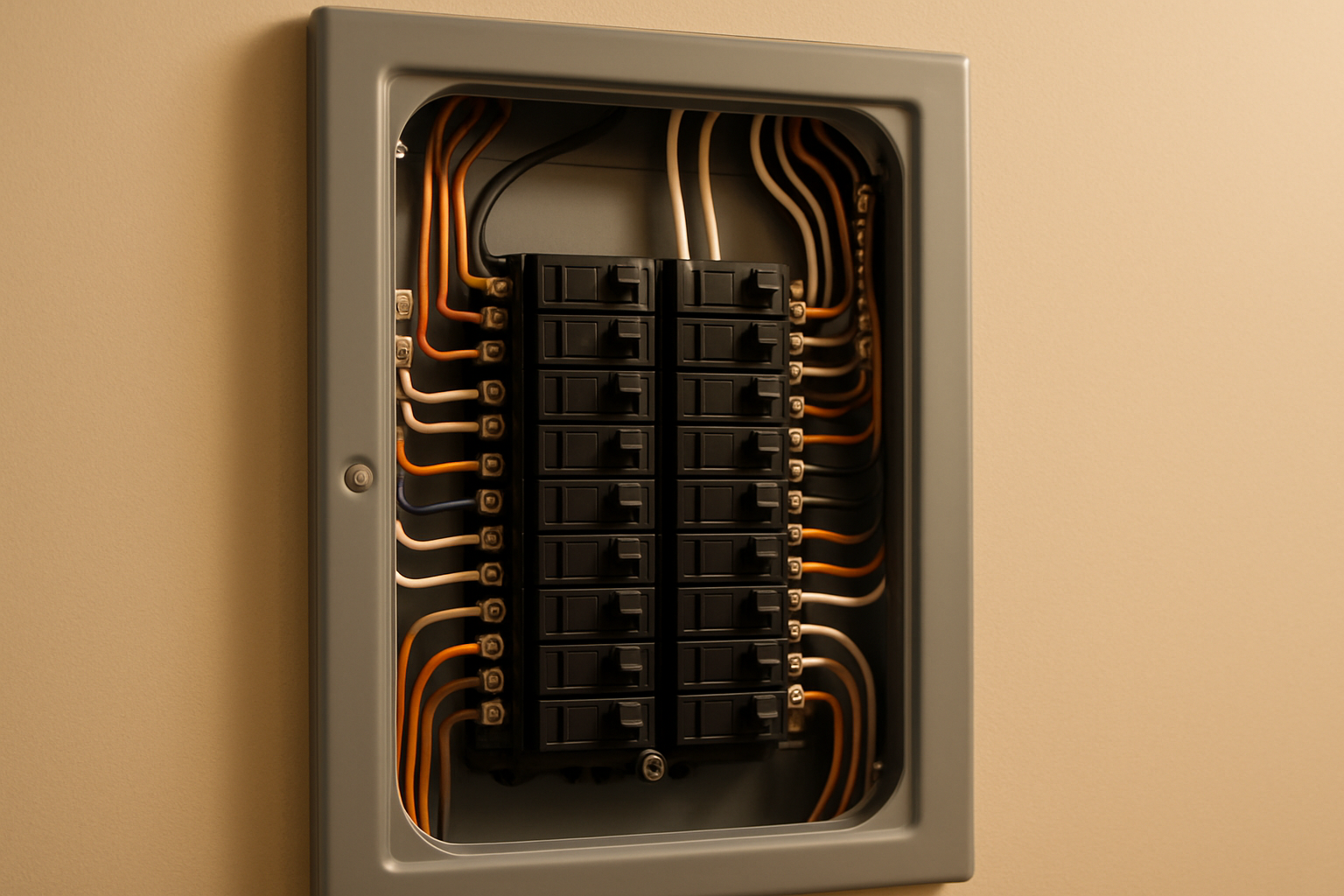
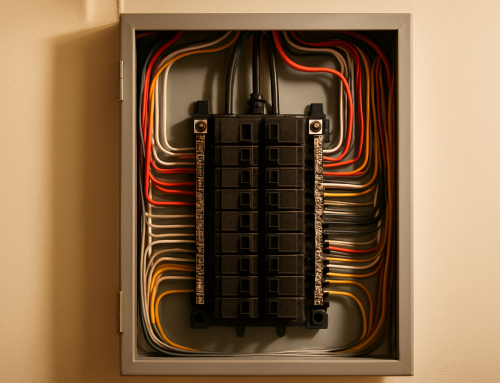
A dedicated circuit is a single electrical circuit that runs directly from your breaker panel to one specific appliance or outlet. Unlike general-purpose circuits that power multiple outlets and devices simultaneously, a dedicated circuit reserves its full amperage for a single load. This means your refrigerator, dishwasher, microwave, or electric range isn’t competing for power with everything else plugged into that kitchen wall. The National Electrical Code requires dedicated circuits for many large kitchen appliances, and Massachusetts electrical code enforces these requirements strictly — meaning older homes that were built before modern appliances became standard often fall short.
When a high-draw appliance like a microwave or refrigerator shares a circuit with other devices, several problems can emerge. The most immediate is nuisance tripping — a breaker that cuts power because the combined load exceeds its rating. But the longer-term risks are more serious. Shared circuits that are consistently running near capacity generate excess heat in the wiring, which accelerates insulation breakdown and increases the risk of electrical fires. Appliance motors and compressors are also sensitive to voltage fluctuations; when they’re forced to start under low-voltage conditions caused by an overloaded circuit, their lifespan is shortened significantly. A dedicated circuit eliminates these stresses entirely.
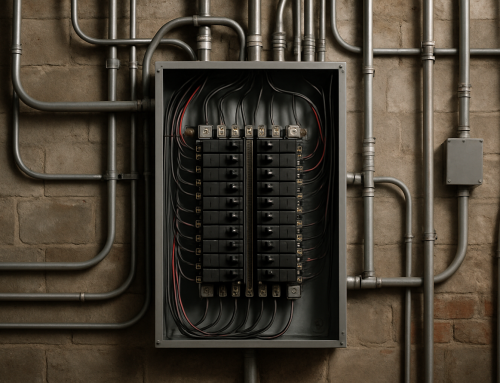
In Eastern Massachusetts, we see this issue frequently in older homes built in the mid-twentieth century, when a 60-amp or 100-amp panel was considered adequate for an entire house. Today’s kitchens routinely include a refrigerator, built-in microwave, dishwasher, garbage disposal, and an electric range or cooktop — each of which has its own amperage requirement. If your panel hasn’t been upgraded to accommodate these loads, even installing dedicated circuits may require addressing your overall electrical capacity first. Adding a subpanel is one way we help homeowners handle expanded kitchen loads without replacing the entire main panel.
Summer in particular puts extra strain on home electrical systems in Eastern Massachusetts. Air conditioning, fans, and outdoor appliances are all running simultaneously, which means a kitchen that functions adequately in cooler months may start tripping breakers regularly during July and August. If you’ve noticed increased tripping this summer, it’s worth having a licensed electrician evaluate your kitchen circuit layout before the problem becomes a hazard.
This is not a project for DIY approaches. Running new circuits through finished walls, sizing wire gauge correctly, connecting to a breaker panel, and meeting Massachusetts code all require a licensed electrician. Improper wiring is one of the leading causes of residential electrical fires, and unpermitted work can create serious complications when you sell your home. Our team handles every dedicated circuit installation with proper permitting and inspection so your work is done right the first time.
At Clark Electric, we are locally owned and operated and have spent over a decade helping Eastern Massachusetts homeowners make their kitchens safer and more functional. If your kitchen appliances are tripping breakers, running on shared circuits, or your home simply hasn’t been updated to meet today’s electrical demands, we’re ready to help. Call us today at (844) 431-8050 to schedule an assessment and find out exactly what your kitchen needs.